

Someone in your accounts payable team has been working inside the same platform and UX for twenty years. But next spring, she’ll be working inside of your shiny new ERP. The only problem – no one has told her yet.
A highly underrated aspect of making ERP implementations work well is the change management element. A technically successful ERP implementation does not guarantee business success. The system must work, the processes must work, and employees must be equipped and willing to use both.
That process doesn’t start once you’re live. It starts way before. In this article we walk through what an ideal version of that process looks like, and some pitfalls to watch out for.
Change management has to be its own work stream
Nearly all strategic work is ultimately change management work. Because pursuing a strategic initiative means doing things differently than how you used to. And people are creatures of habit. No one likes change.
Implementing a new ERP system is one of the bigger changes you can make, because your ERP system touches nearly everything in the organization. It represents more change for more stakeholders. Which means change management is incredibly important.
You might ask, “why can’t the project manager do it?” The project manager is responsible for implementing the right thing. Their role is to capture requirements, create user stories, do QA, keep the work moving at the right pace and the right level of quality. Tasking them with keeping your broader team involved and adequately prepared is different work.
Shepherding a business through a new ERP is an actual job. It requires sustained effort every week. It can’t simply be folded into project management, or added as a line item on a steering committee agenda. You need an actual owner, with an actual plan, and actual deadlines.
So what does a plan like that look like?
A good change management plan speaks to everyone
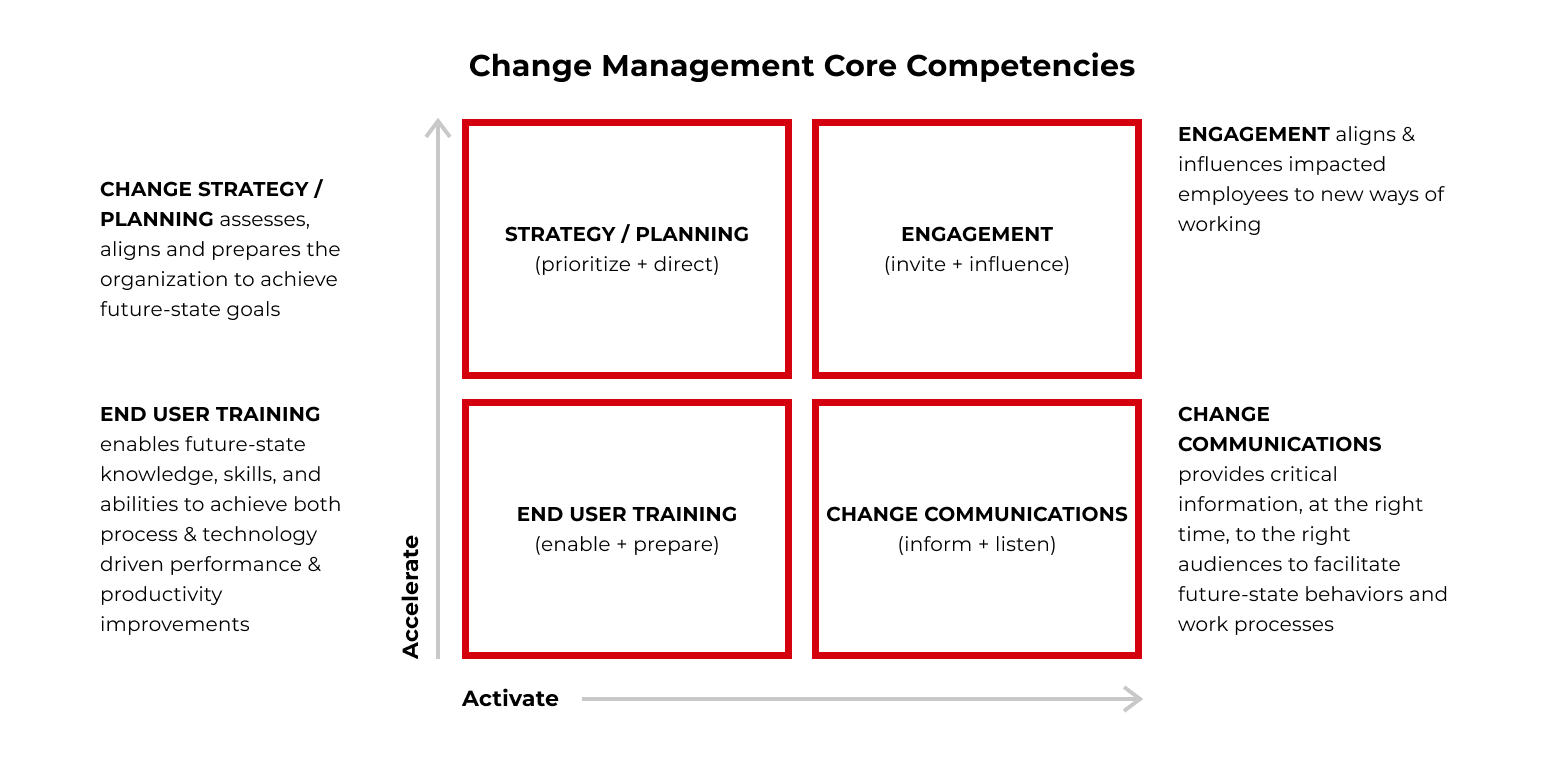
Communication is what makes people aware of what’s coming. It’s essential. But it’s not the whole job. You still have to get them involved so they commit to the change. You have to train them so they can actually do the work. And you have to keep at it after go-live so the new habits stick. It starts the month the project is signed and it doesn’t stop until it’s become the new normal for the business.
Every month, you should tell the whole business where the project is going, and where it is right now. You want to make sure everyone is aware that this is coming and communicate progress so they can start to prepare mentally.
The best version of this I have seen was a client that sent out short videos weekly to every future user. Why are we doing this? Why is the system called M3? Did you know you will open the new system with your email address? Here is what a screen looks like.
This isn’t “training”. This is acclimating. A sustained cadence of communication that chips away at the fear of change and gets folks used to what’s coming. If you have relied on one system for your entire working life and someone tells you it is going away, “oh crap” is a reasonable reaction. The videos help your team ease that anxiety.
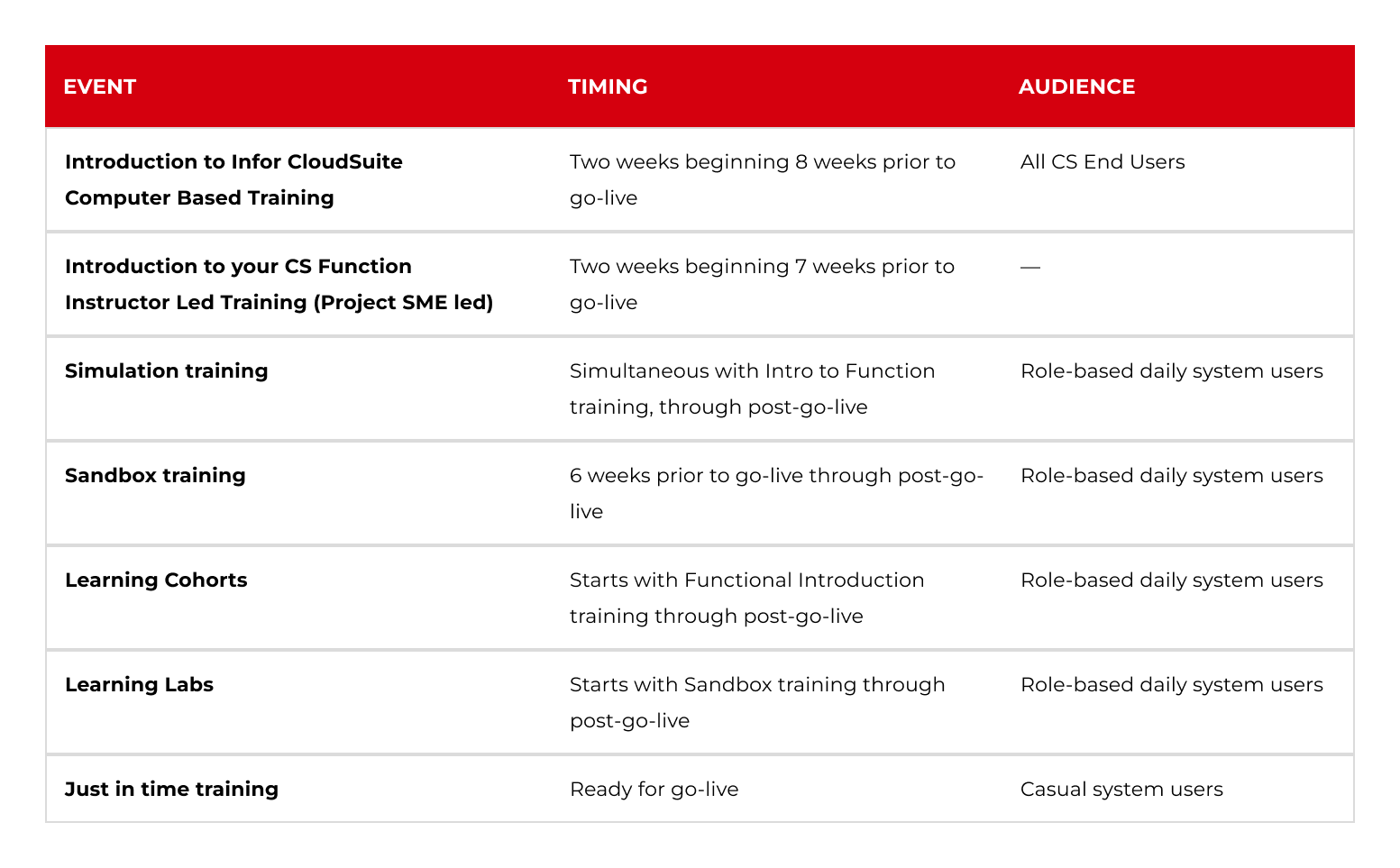
Whatever the format is, it needs to be consistent and relevant, ideally lining up with the major milestones of the implementation itself. So early on it’s about orientation. As you get closer you start talking about UAT and who will be involved – this is huge for helping go from awareness to commitment. Near the end you start prepping them for what to expect during training and what your expectations are for early use.
Infor recommends starting “near the end” about 8 weeks out. It might look something like this:
The importance of data stewardship
Communication is one half of the preparation. The data is the other half. And, just like the communication side, it needs an owner on your side. The vendor can’t be that owner. Even Infor’s full-service change package works alongside your people, and the entry-level package is two hours a week of advisory. Someone on your side has to be accountable for the data side.
If you have 20 years of records spread across a bunch of systems, your vendor can help with the data strategy. They can use tools to go over your records and hunt for duplicates or gaps. But they have no way of knowing that customer ABC123 and customer ABC234 are actually the same company. There is tribal knowledge behind your data, and that requires a person to help translate it into your new systems.
The other aspect of data that often comes up is integration. Most modern cloud systems offer APIs, but that doesn’t automatically mean they’ll work seamlessly together. You need to understand what data needs to move between systems, and how those systems support your business processes. Identifying potential integration gaps early gives you time to decide what to keep, what to change, and what to retire before they become costly problems later in the project.
The messy middle is where momentum dies
The excitement of a new initiative might last a couple months. But as anyone who’s been through an ERP implementation knows all too well, there’s a long stretch where just about everyone on the project team wants to be anywhere else.
The best change management I’ve seen for keeping energy high is a consistent demo cadence. We don’t run six month waterfalls where we build build build and unwrap the gift at the end. Agile or sprint-based development creates more frequent check-ins to avoid having to do major course corrections. But it also has the benefit of keeping momentum up internally. Building for a stretch and then showing what you’ve done keeps the team engaged. Of course, this takes care of the project team. But the folks on the floor don’t see this stuff. So how do you keep them involved?
Plan for people to leave
We see a lot of fallen soldiers during an ERP implementation. Some churn is always expected. But ERP migrations can be notoriously hard, and some people leave because they’re simply burned out. They might leave in the middle (not fun), or they’ll stick around until it goes live but then leave (better, but still not great.)
When that happens you need a plan for finding the new person and getting them up to speed, to build a new relationship with your vendor, to get them read into all the weirdness and nuance of your particular implementation.
There’s no great defense against this. The closest I’ve found is making sure you never let one person hold all the knowledge of a given work stream. Put two names on everything. Include more than one stakeholder in each conversation. And insist on documenting everything. Ask your vendor for onboarding training for future hires as a project deliverable. Assume turnover, and build in protections to mitigate its impact.
You’re not done at go-live
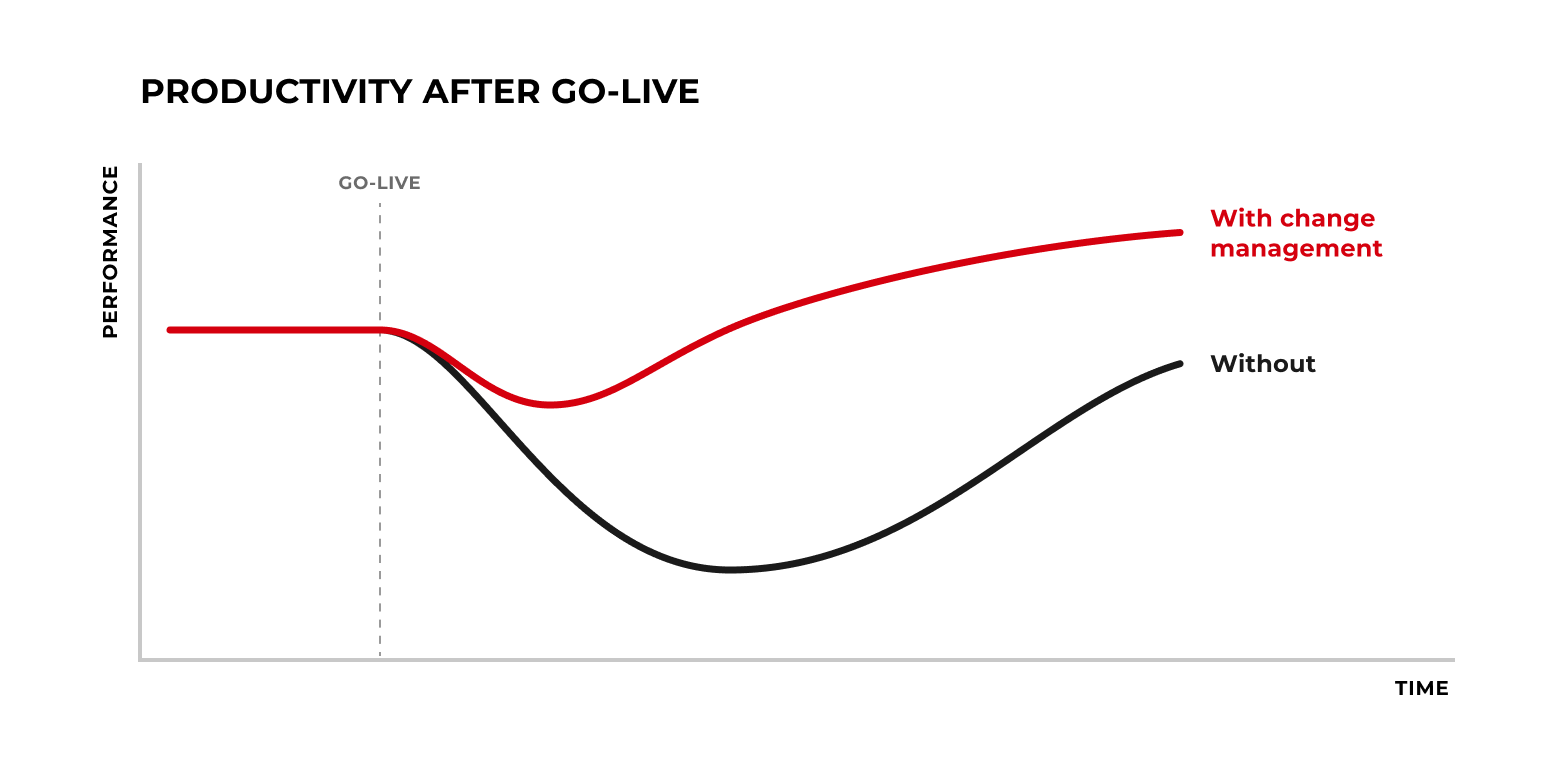
There’s a tendency to think the project ends once the system is live. At that point the team is exhausted, and no one wants to think about what’s not working. Productivity drops after go-live no matter what you do. Infor’s own change curve shows it. But what you do now determines how deep that dip is, and how long it lasts. You have to be on your game if you expect people to change their behavior.
Despite everyone’s best efforts, there will be stuff that needs fixing. A requirement was either not quite met, or once it’s live you realize needs to be tweaked. Or a use case you didn’t think of surfaces. You have to expect this and allocate sufficient resources for addressing it, otherwise you spend hundreds of thousands of dollars only to have your team default back to using spreadsheets again.
Set up office hours before go-live, not after. Infor’s approach is to run these as learning labs and role-based cohorts in a Teams channel, starting alongside sandbox training and continuing after go-live. Whatever you call them, people need a place to ask questions and show where they’re stuck. Modern ERP systems are powerful and feature rich. But they can also be hard for people to master. There’s a good chance many of the things your team wishes the new system could do it actually can – they just aren’t able to find it.
When you do find things that are missing, speed to correct it is critical. If a change takes more than a quarter, Excel is probably going to win. Plan to address issues quickly, and to share these updates with the team. A steady stream of “we heard your feedback, and we’ve made these improvements” can go a long way.
Your change management plan is at least as important as the implementation itself
Build the change plan as its own work stream, including communication, training and post-go-live support. Decide who owns the data. Assume your champion might leave. Have a plan for what happens after go-live.
You probably made a good choice with the software you chose. But your change management process will determine whether it lives up to its potential.